
From Byzantine domes to Hittite ruins, cotton-white thermal pools to underground cave churches. A journey through one of the world's most layered countries.
Istanbul • Kuşadası • Ephesus • Pamukkale • Konya • Cappadocia • Hattusa • Tokat • Ballıca Cave
Türkiye has a way of making you feel like you're standing at the intersection of everything: East and West, ancient and modern, sacred and spectacular. I went in knowing it would be special. I had no idea just how much ground one country could cover.
Istanbul: A city you ride, not just visit
Most people arrive in Istanbul and plant themselves in Sultanahmet for a few days. We did something better: we used the city like locals do. In a single day, we crossed Istanbul by metro, express bus, trolley, funicular, and finally a cruise along the Bosphorus. Each mode of transport revealed a different layer of the city, and by the time we were gliding across the strait with the skyline behind us, it felt less like sightseeing and more like actually living somewhere for a moment.
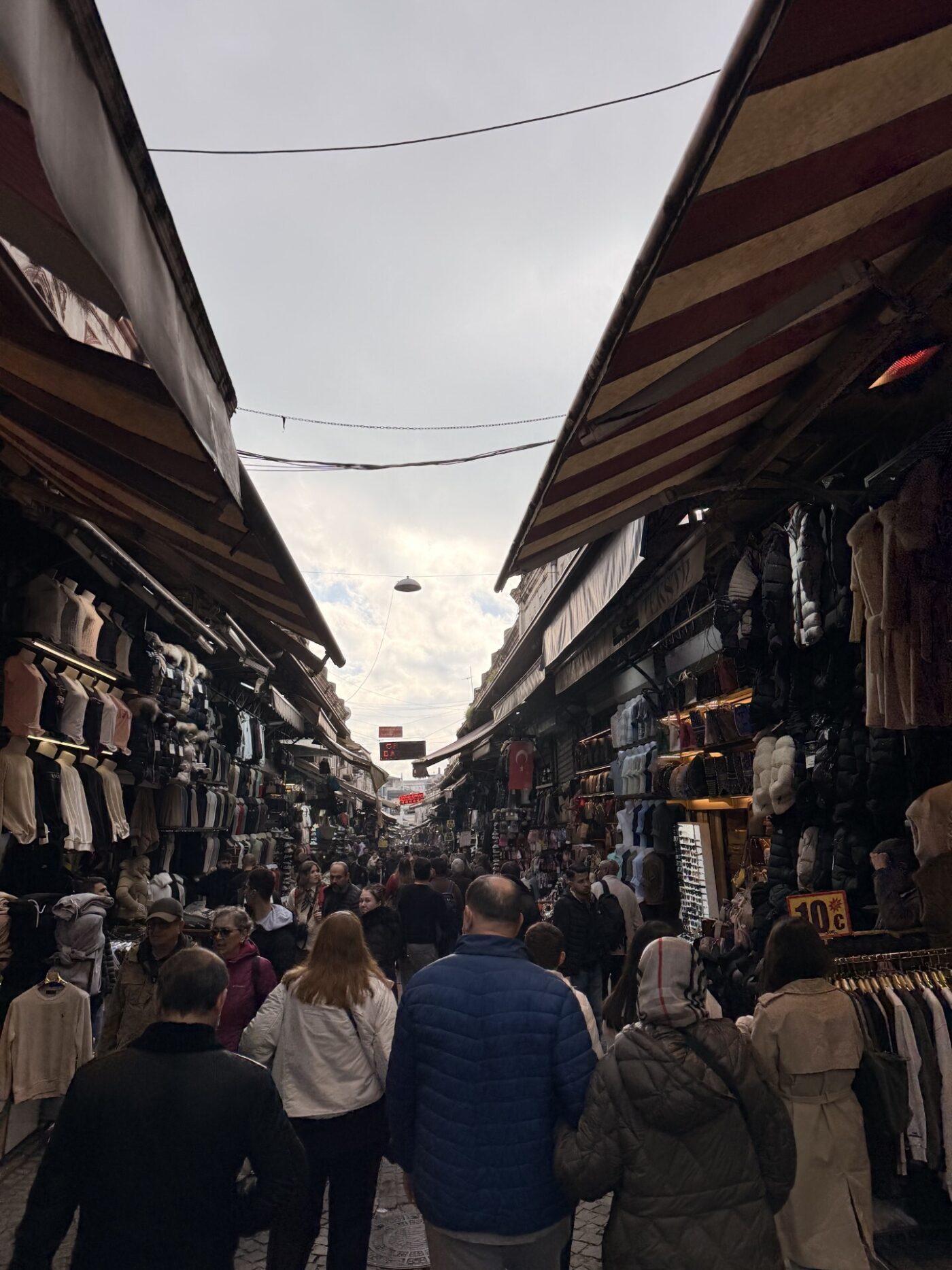
The Blue Mosque stopped me in my tracks, not just for the architecture, but for the quiet inside. There's something about a space that's been holding people's prayers for four centuries that you can genuinely feel. And the Grand Bazaar is nothing like you imagine and exactly like you imagine at the same time: chaotic, colourful, a little overwhelming, and completely unmissable.
"By the time we were gliding across the Bosphorus with the European and Asian skylines on either side of us, it felt less like sightseeing and more like actually living somewhere."
Practical tip
Get an Istanbulkart transit card on arrival. One card covers the metro, tram, funicular, and ferry — it makes spontaneous city exploration incredibly easy and affordable.
On the road: An 8-day fam trip with a global crew
Once we left Istanbul, the trip shifted gears entirely. We flew into Izmir to start our 8-day road trip aboard a tour bus with travel agents from Canada, Egypt, Italy, China, Miami, and Colombia. That mix of perspectives turned every stop into a richer conversation. What felt routine to one person was completely new to another, and we all became each other's guides in unexpected ways.
There's something special about experiencing a country alongside people who are also in the business of sending travellers there. The questions you ask are different. The details you notice are different. And the conversations over dinner are a lot more interesting.
Ephesus and Kuşadası: Ancient streets, Aegean air
Ephesus is one of those places that earns its reputation. Walking the marble-paved Curetes Street with the Library of Celsus at the end of it is genuinely one of the great travel experiences. The scale of it, the detail that survives, the way you can almost picture the city alive around you.
Along the way, we visited a local carpet and kilim production center. We watched as silk was spun from silkworms and witnessed traditional hand-weaving techniques.
We then based ourselves in Kuşadası for two nights, a lively coastal town that made a perfect counterpoint: seafront evenings after a day in the ruins.
Pamukkale and Hierapolis: The white terraces
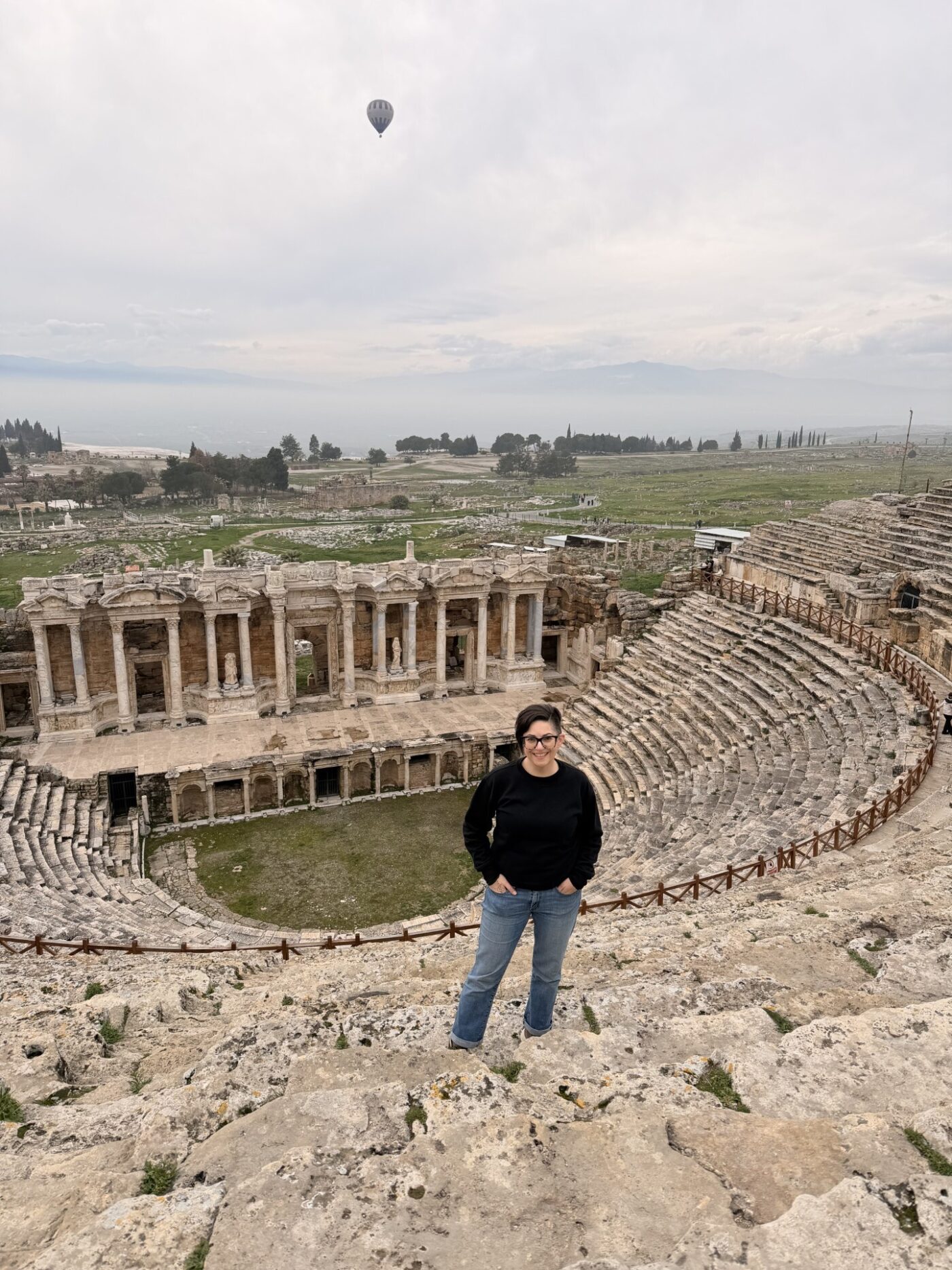
Nothing quite prepares you for Pamukkale. The travertine terraces, white as snow, filled with mineral-rich thermal water, feel surreal even when you're standing on them. Pair that with the ruins of Hierapolis spreading across the plateau above, and you have one of those rare places where natural wonder and human history sit right beside each other. We walked barefoot through the thermal waters and then raced up the hill to step foot in the ancient Roman Theatre of Hierapolis. Built during the reign of Emperor Hadrian in the 2nd century AD, the Hierapolis Theatre was designed to hold up to 12,000 people. Its well-preserved seating area, grand columns, and intricate stone carvings give visitors a glimpse into the opulence and importance of public entertainment in the Roman Empire.
Konya: A different kind of quiet
Konya doesn't get as much attention as it deserves on the international travel circuit, and that's part of what makes it worth going. As the home of Rumi and the Mevlevi Order, it carries a contemplative energy that feels distinct from anywhere else in the country. The Mevlâna Museum is genuinely moving, even if you arrive knowing little about Sufism.
Cappadocia: Göreme, clay pots, and grounded balloons
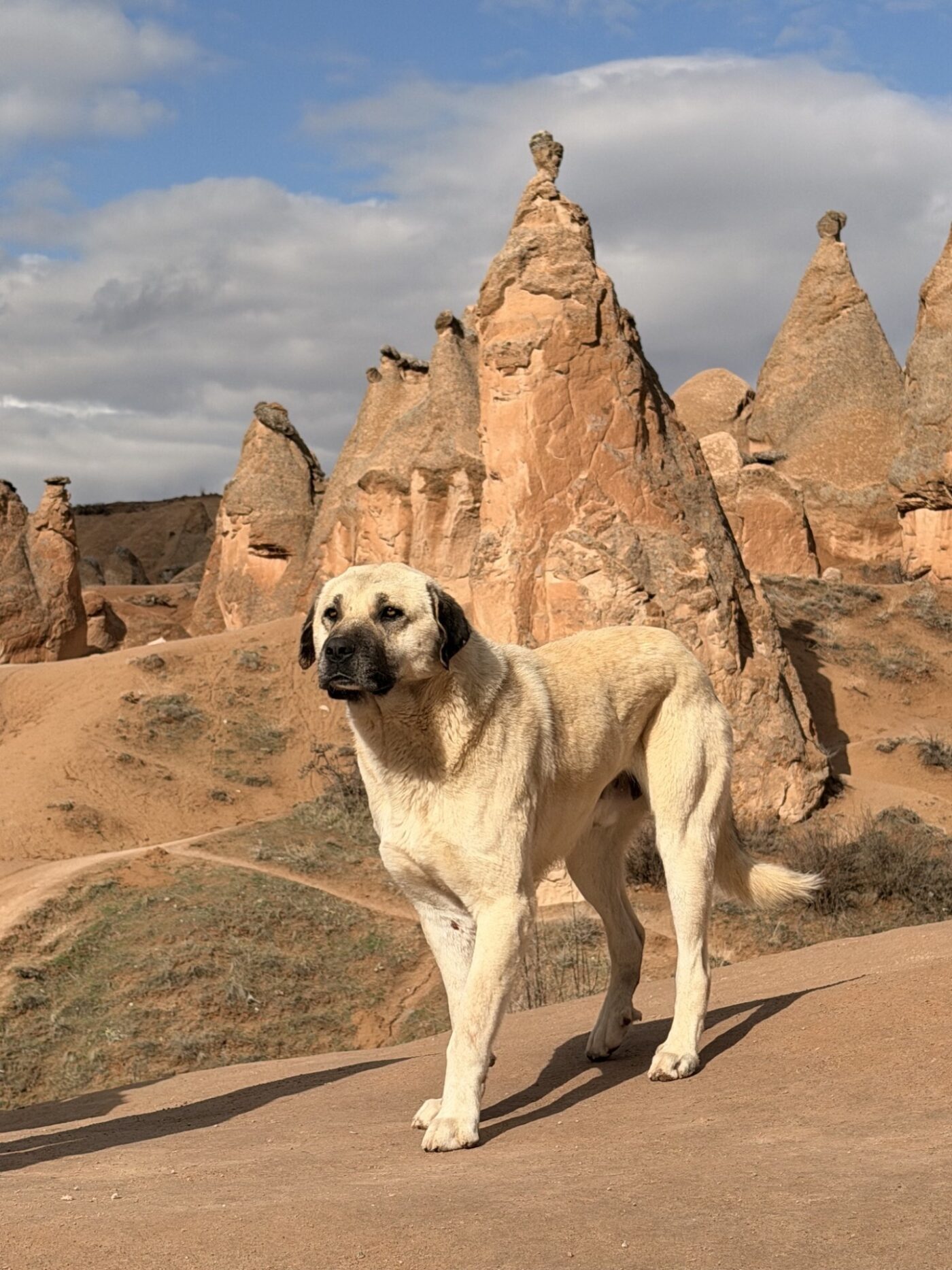
Cappadocia is the kind of landscape that looks like it was designed by someone who had never seen Earth before. The fairy chimneys, the valleys, the cave churches and then the Open Air Museum at Göreme, where Byzantine frescoes painted a thousand years ago are still vivid on cave walls. It's one of my highlights of the entire trip, and one I'd send any client to without hesitation.
We had hoped to take a hot air balloon ride over the valleys at sunrise, probably the most iconic Cappadocia experience there is. Wind conditions on both days we were in Cappadocia meant flights were cancelled, which was genuinely disappointing. But it's a good reminder for anyone planning to go: build in extra nights if the balloon ride is a must. The weather calls the shots, and one morning (or even two) is never a guarantee.
What did make it onto the table was a clay pot kebab, a Cappadocian specialty where the meat is slow-cooked and sealed inside a clay vessel that's cracked open at the table. It's as dramatic as it sounds, and just as delicious. Don't miss it.
Agent note
For hot air balloon rides in Cappadocia, book early and plan for at least two or three mornings of availability. Flights are weather-dependent and cancellations are common, one morning isn't enough buffer if it's high on your client's list.

Agent note
Göreme's Open Air Museum is best visited early morning before the tour groups arrive. Build in a half-day minimum, there's more to see than most people expect.
On The Subject of Food
Türkiye will feed you well. The kebab alone is worth the trip, endlessly varied across regions, always fresh, never what you expect from the versions you've had at home. But the real revelation for me was elma çay (pronounced [tʃaj] or chai): a warm, lightly sweet apple tea served in little tulip glasses that appears everywhere, at every hour, offered freely and drunk slowly. It's a small thing, but it's the kind of small thing you find yourself missing when you're back home.
Hattusa and Tokat: Where the Silk Road still lives
This is where the trip went somewhere most travellers never go and honestly, it might be where it went deepest. Hattusa, the ancient Hittite capital, is extraordinary: a vast ruined city spread across a hillside, predating almost everything we tend to think of as "ancient." It's a UNESCO World Heritage Site that sees a fraction of the visitors that Ephesus does, which makes it feel like a discovery.
Tokat was a genuine surprise, and the place I keep coming back to when people ask what stood out. The city has its own quiet confidence; historic streets, local craftspeople, a pace of life that feels entirely its own. But the real highlight was where we stayed: the Silk Road Museum Hotel housed in a restored caravanserai. Sleeping inside a building that once sheltered merchants and traders crossing continents is the kind of experience that doesn't translate into a star rating. It's history you actually inhabit, not just observe.
Where to stay in Tokat
Tokat's Silk Road Museum Hotel is a restored caravanserai where guests sleep inside a piece of living history. If you're routing through central Anatolia, this is the kind of property that turns a night's accommodation into a destination in itself.
Ballıca Cave: Underground Türkiye
Our final stop before heading home was Ballıca Cave near Tokat, one of the largest and most impressive stalactite caves in the country. It's the kind of place that makes you realise Türkiye's extraordinary geography doesn't stop at the surface. A fitting end to a trip that kept finding new ways to be spectacular.
So, should you go?
Yes,but go further than you think you need to. Istanbul is incredible, and it should be on every itinerary. But the Türkiye that really gets under your skin is the one past the well-worn path: the Hittite ruins at Hattusa, a night in a Silk Road caravanserai in Tokat, the terraces at Pamukkale at golden hour. This is a country with thousands of years of history in every direction, and it rewards travellers who are curious enough to look.
If you're thinking about a trip to Türkiye and want help putting together an itinerary that goes beyond the highlights reel, I'd love to chat.